
If your utility room is short on space, it is natural to wonder whether a wall mounted oil boiler could be a neat answer. For many homes, the appeal is obvious: heating tucked away indoors, pipework kept tidy, and the boiler positioned where it can be reached for servicing without dominating the room.
The honest answer is that it can be realistic in the right property, but it depends on more than the size of the appliance. A good installation plan looks at the wall, flue route, oil supply, ventilation, controls, access and the wider heating system before deciding whether a compact unit is the best fit.
The short answer: sometimes, but the room has to work as a whole
A small utility room can be suitable for an oil boiler when there is enough clear space around the unit, a practical route for the flue, safe access for future servicing, and a sensible way to connect the oil line, heating pipework, hot water system and controls. The boiler itself is only one part of the decision.
This is where a professional survey matters. A homeowner might look at an empty wall and see a possible boiler position, while an installer will also be thinking about service clearances, condensate drainage, nearby cupboards, worktops, electrics, pipe runs and whether the wall can support the appliance. That wider view prevents the room becoming cramped or awkward once everything is connected.
It is also worth remembering that oil boilers vary by type and layout. Some are designed for indoor installation, some are external models, and some properties are better suited to a floor standing appliance. If you are replacing an older boiler, the existing position may not automatically be the best position for a modern one. For a broader look at how replacement decisions are made, Greenwoods has a helpful guide on signs your boiler needs repair or replacement.
What installers check before recommending a wall mounted boiler
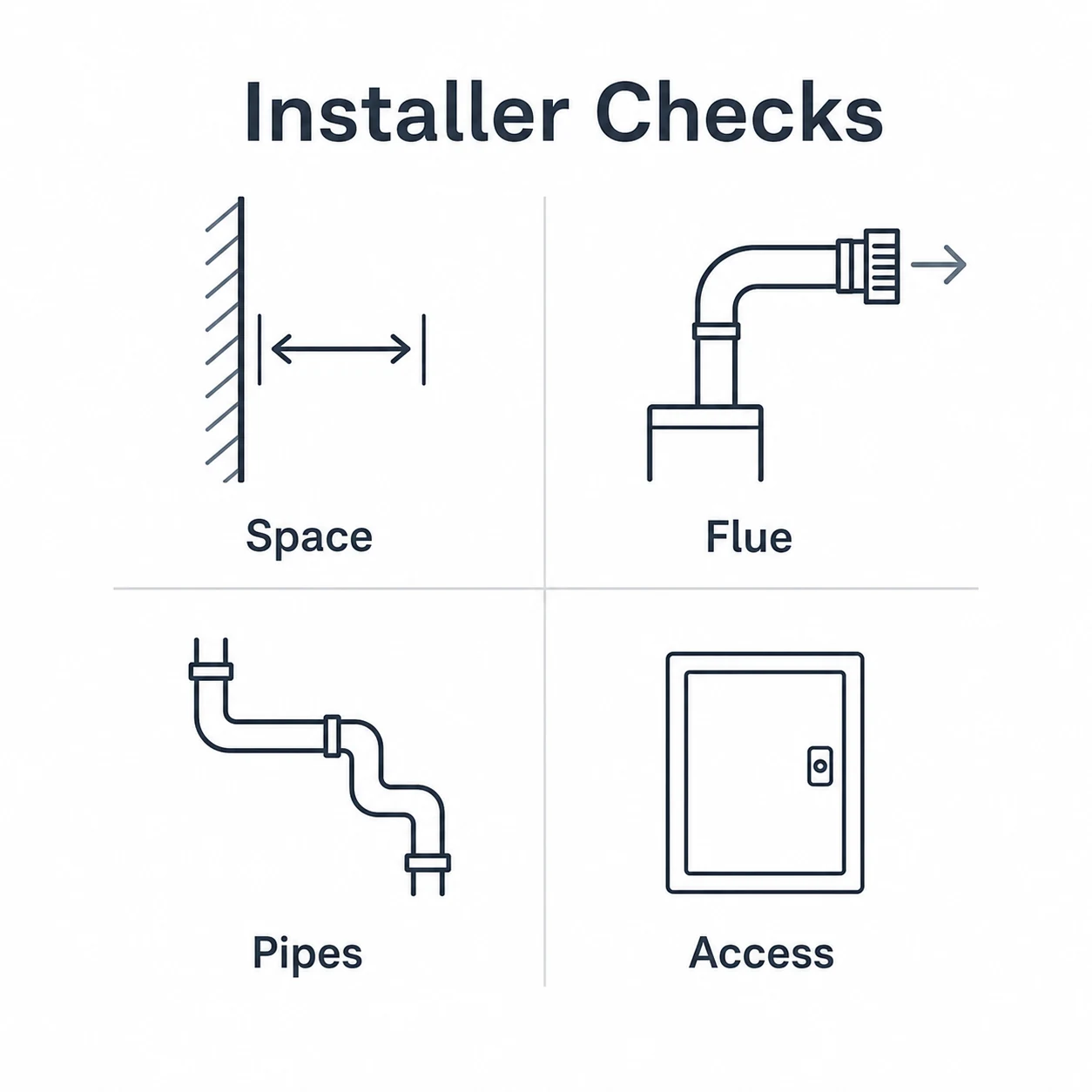
Before an installer says yes to a wall mounted oil boiler in a compact utility room, they will usually look at several practical details. None of these checks are about making the project complicated. They are about making sure the finished installation is safe, tidy and easy to live with.
- Wall suitability: The wall needs to be strong enough for the appliance and suitable fixings. Lightweight partitions, poor masonry or awkward boxing may limit the options.
- Manufacturer clearances: Boilers need space for installation, inspection and servicing. A tight cupboard or crowded corner may look neat at first, but it can make future maintenance harder.
- Flue position: The flue needs a compliant route and terminal position. Windows, doors, boundaries, overhangs and neighbouring features can all affect what is possible.
- Oil supply route: The oil line must be routed sensibly from the tank to the boiler. The installer will consider protection, accessibility and how the pipework enters the property.
- Condensate drainage: Modern condensing boilers need a suitable condensate route. In small rooms, this can influence the best location.
- Heating system layout: The position should suit the existing pipework, hot water cylinder if present, controls and any planned upgrades.
These checks help decide whether a wall mounted unit is genuinely suitable, or whether another boiler type would give a better result.
How to keep pipework tidy in a compact utility room
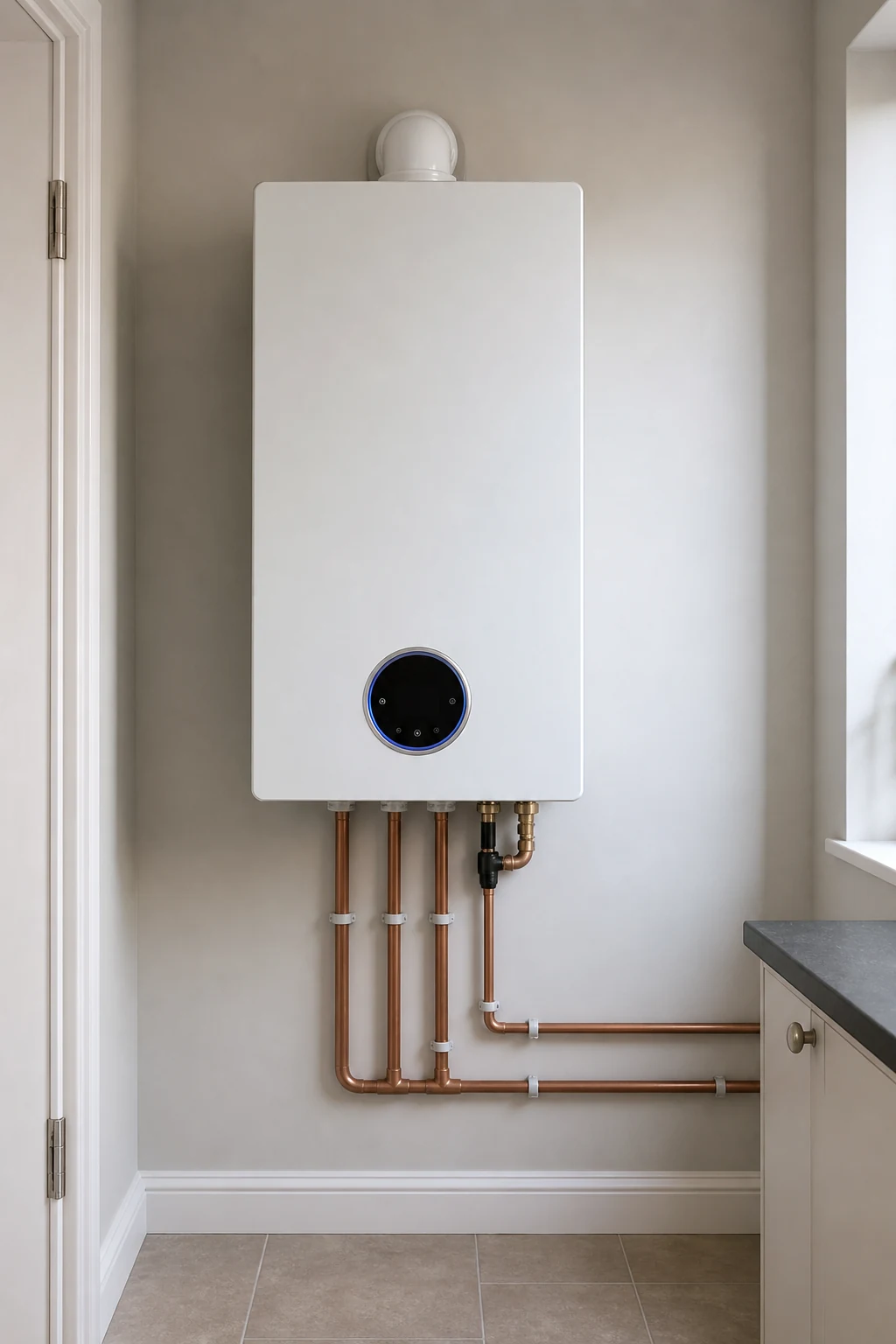
For many homeowners, the worry is not only whether the boiler will fit, but whether the room will still feel usable afterwards. Good pipework planning makes a big difference. A neat installation should keep valves, filters, filling points where relevant, controls and serviceable parts accessible without leaving the room feeling cluttered.
Pipe routes are often easiest when the installer can work with the existing heating layout, but that is not always the only option. In some replacements, rerouting a section of pipework can make the finished arrangement cleaner and more practical. The aim is not to hide everything at any cost. The aim is to make the important parts easy to inspect, isolate and maintain while keeping the everyday utility space organised.
Small details matter. For example, a magnetic filter needs to be reachable, isolation valves should not be trapped behind fixed units, and heating controls should be positioned where they are easy to use. If cupboards or shelving are planned around the boiler, they should be discussed before installation so the appliance is not boxed in too tightly.
If you are planning a wider heating upgrade at the same time, Greenwoods explains the general process in what happens during an oil boiler installation. That can help you understand how the survey, positioning and commissioning stages fit together.
Heating controls can be part of the space saving plan
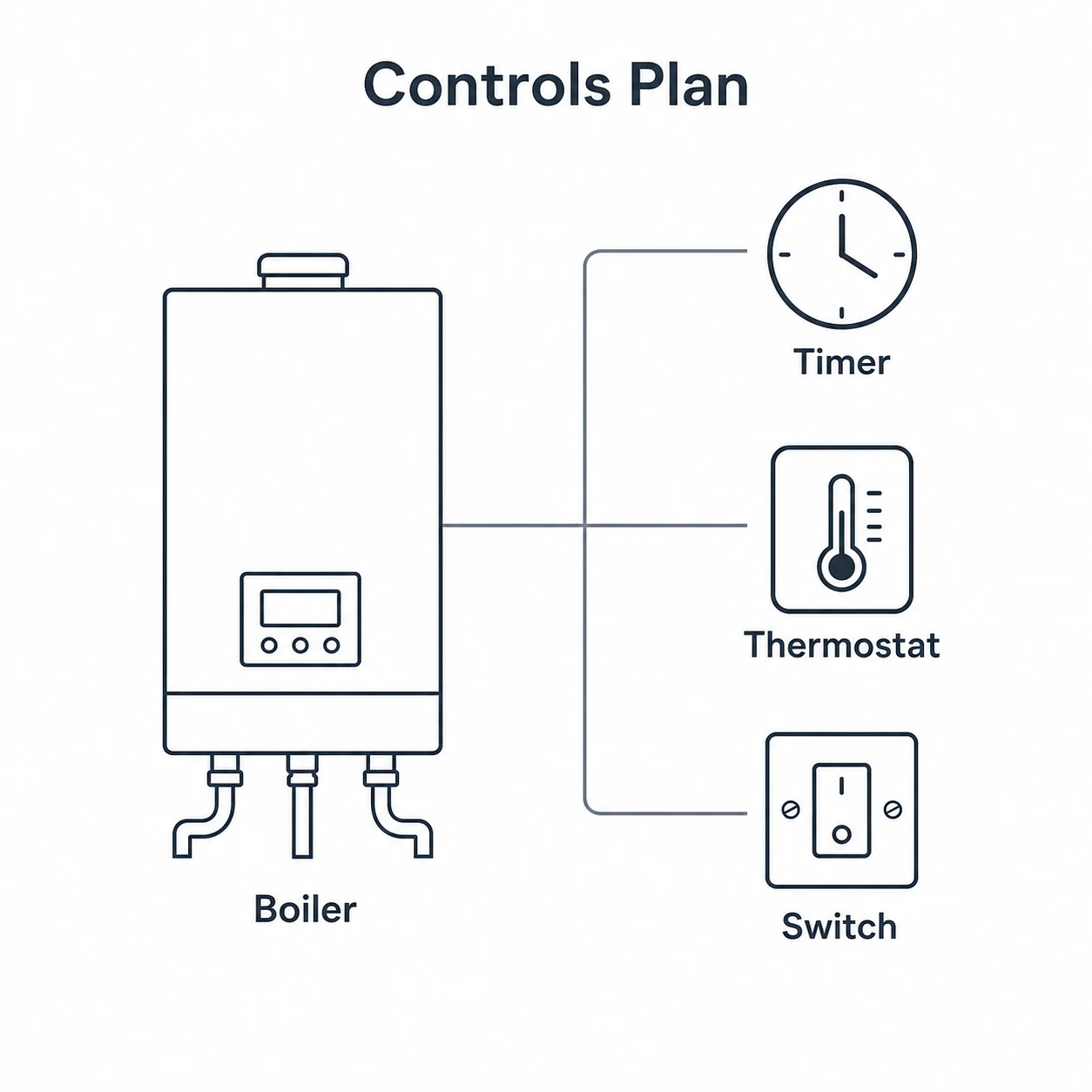
A modern boiler installation is not just about the boiler casing. Controls are an important part of how the system feels day to day, especially in a smaller room where wall space is limited. A well planned control layout avoids scattered switches, awkward programmers and confusing wiring.
Depending on the heating system, the installer may discuss programmers, thermostats, motorised valves, cylinder controls, smart controls or zoning. Not every home needs every option, and the right arrangement depends on how the property is used. The useful question is simple: can the controls be positioned clearly, reached easily and understood by the people who use the heating?
In a compact utility room, it is usually better to plan the control position before the boiler is fitted. That allows the installer to think about cable routes, pipework, access panels and how the room will be used for laundry, storage or entry from outside. A tidy control area can make the whole installation feel more considered.
For homes looking at broader heating choices, Greenwoods also has a practical comparison in the guide to choosing between gas and oil boilers.
When a wall mounted oil boiler may not be the best option
There are times when a wall mounted oil boiler is not the right answer, even if the room looks small enough to make one appealing. If the wall is unsuitable, the flue route is poor, or service access would be too restricted, another location or boiler type may be better.
A very tight room can also create practical issues. Utility rooms often contain appliances, sinks, cupboards, consumer units, stop taps and stored items. If the boiler position would make it difficult to open panels, reach valves or work safely during servicing, the installation may look compact but prove inconvenient later.
External boilers can be a sensible option for some properties where indoor space is limited. A floor standing internal boiler can also be a better match in certain layouts. The right answer depends on the building, the oil tank position, the heating demand and how the household uses the space.
It is worth treating the boiler location as part of the whole heating system, not as an isolated product choice. That approach is especially important in older homes, homes with previous heating alterations, or properties where the utility room has been adapted over time.
Servicing and maintenance access should be planned from day one
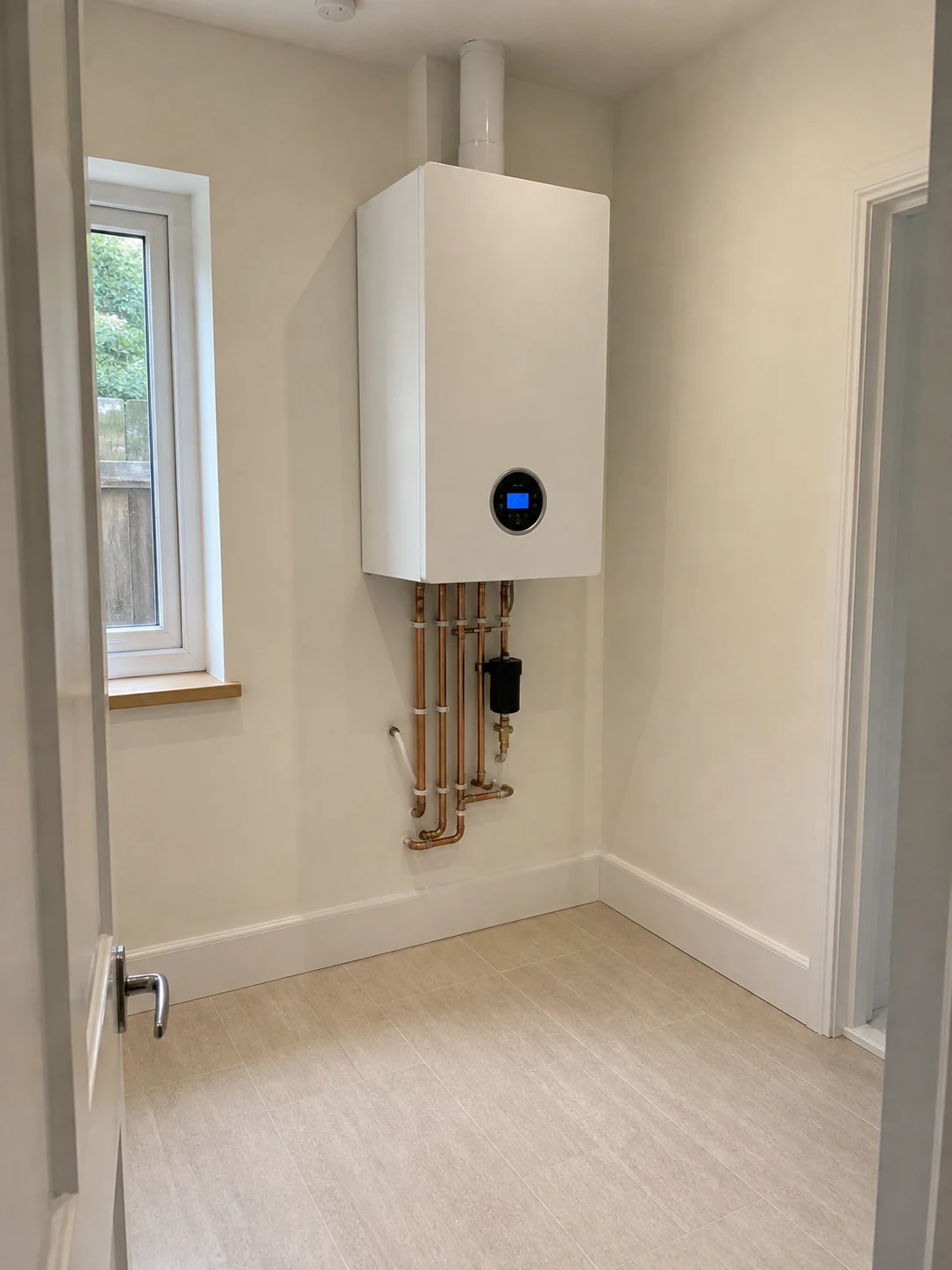
A good small room installation should still be straightforward to service. Oil boilers need regular professional attention to keep them running cleanly and reliably, and the engineer needs proper access to key components. A position that saves space on installation day should not create access problems later.
That means leaving the required clearances, avoiding fixed joinery that blocks panels, and making sure filters, valves and controls can be reached. If the room will have storage, shelving or worktops added later, mention this during the survey. The installer can then advise what must stay clear.
Routine servicing is also a useful time to spot wear, combustion issues, leaks, control faults or early signs of poor performance. Greenwoods covers the importance of this in the hidden costs of ignoring boiler servicing.
In practice, the best installations are the ones that still make sense years later. The boiler is accessible, the pipework is understandable, the controls are simple to use, and the room still works for everyday life.
- A wall mounted oil boiler can fit in some small utility rooms, but the wall, flue, clearances and system layout all matter.
- Tidy pipework is planned, not accidental. Filters, valves and serviceable parts still need to be easy to reach.
- Heating controls should be considered as part of the installation layout, especially where wall space is limited.
- If access, flue routing or wall strength is poor, another boiler type or location may be more suitable.
- Future servicing should influence the boiler position from the beginning.
Frequently asked questions
Can I put an oil boiler in a cupboard in a utility room?
Sometimes, but only if the cupboard allows the clearances, ventilation where required, flue arrangement and service access specified for the boiler. It should be assessed by a qualified installer before any boxing or cupboard work is planned.
Is a wall mounted oil boiler always smaller than a floor standing one?
Not always in a practical sense. The casing may save floor space, but the installation still needs room for pipework, controls, filters, flue connections and servicing. The best option depends on the full layout, not just the boiler dimensions.
Will replacing my old boiler mean the new one goes in the same place?
Not necessarily. The existing position may still be suitable, but a modern replacement can have different flue, condensate, clearance and control requirements. A survey will confirm whether keeping the same location is sensible.
Can I choose the boiler position myself?
You can suggest a preferred position, and it is useful to explain how you use the room. The final recommendation should come from an installer who can check safety, access, manufacturer requirements and the wider heating system.
Planning a compact oil boiler installation?
If space is tight, Greenwoods can assess the room, explain the realistic options and help plan a neat oil boiler installation that suits the way your home works.